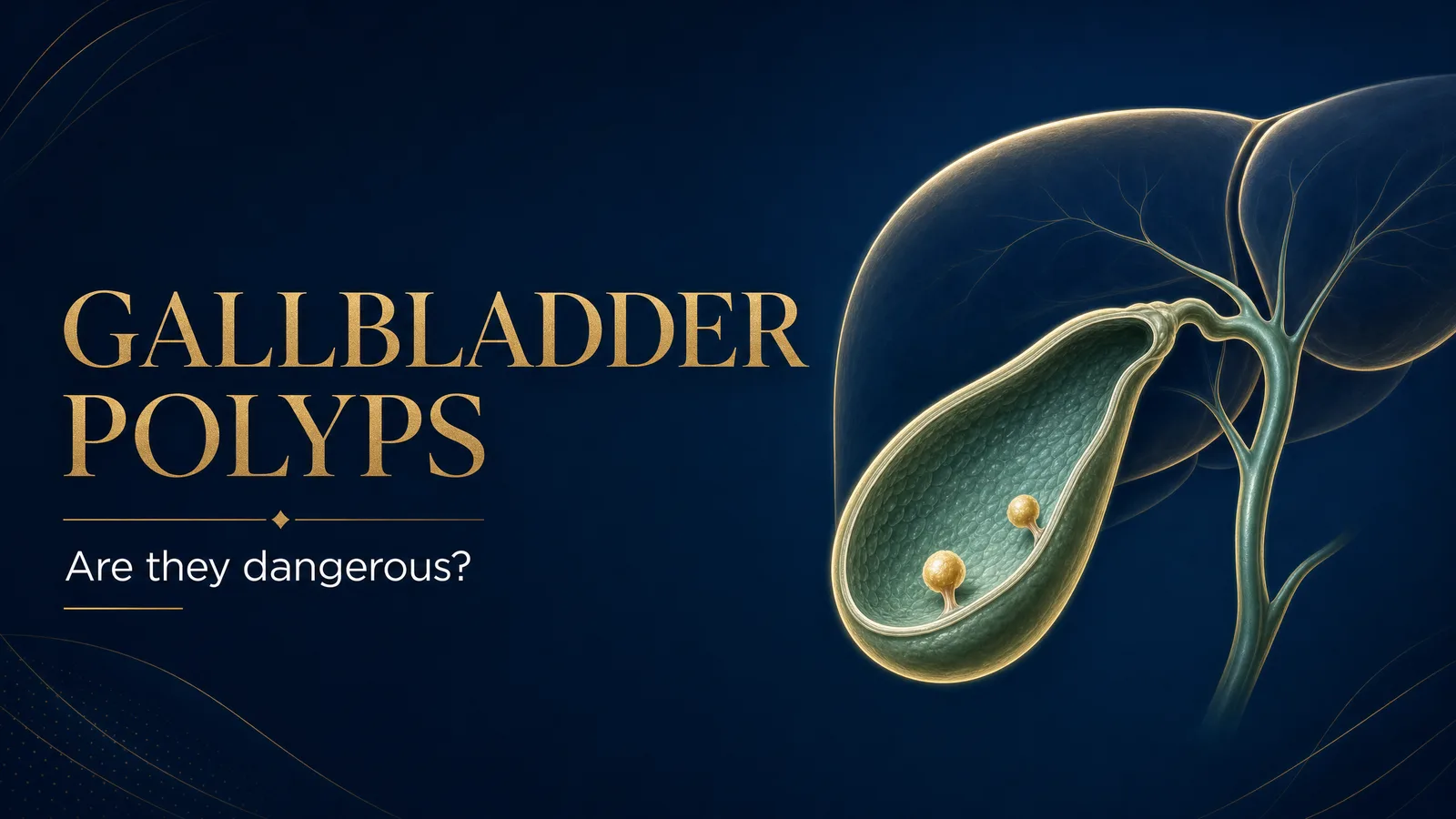
If a scan has found a gallbladder polyp, the first thing worth knowing is that the great majority are harmless. A gallbladder polyp is a small growth on the inside lining of the gallbladder, and most are found by chance on an ultrasound done for something else. A small number, though, are worth keeping an eye on — so the useful question is not "is it a polyp?" but "what kind, and does it need watching or removing?"
This guide explains what gallbladder polyps are, how doctors tell the reassuring ones from the ones that need attention, and how the decision between monitoring and surgery is actually made. It is general education, not a diagnosis — only an assessment of your own scan and history can tell you what your polyp means.
What a gallbladder polyp is
The gallbladder is a small pouch under the liver that stores bile. A polyp is a small growth on its inner lining that projects into the space where bile is stored. "Polyp" is a description of shape, not a diagnosis in itself — several different things can look like a polyp on a scan, and they don't all carry the same meaning.
The most useful split is between pseudopolyps and true polyps. Cholesterol pseudopolyps — small deposits of cholesterol in the gallbladder lining — are the most common type and do not turn into cancer. True (neoplastic) polyps, mainly adenomas, are less common and are the ones that carry a small risk of changing over time.
How common are they, and how are they found?
Gallbladder polyps are fairly common. Depending on the population studied, somewhere between about 1 and 10 people in 100 are found to have one, and the NHS puts the figure at around five to ten per 100. Almost all are picked up by accident, because an ultrasound scan done for another reason happens to show one. Ultrasound is also the main test used to keep an eye on a polyp over time.
Are gallbladder polyps dangerous?
This is the question most people really want answered, and the honest answer is: usually not, but not never. The great majority of gallbladder polyps are benign, and cholesterol pseudopolyps in particular carry no cancer risk at all. The reason polyps are taken seriously despite this is the smaller group of true polyps, which carry a small risk of becoming gallbladder cancer over time — a cancer that is much easier to deal with when caught early.
So the goal of assessment is not to remove every polyp. It is to sort the harmless majority (which can simply be left alone or watched) from the minority that deserve closer attention. That sorting is done mainly on size and appearance, which the sections below explain.
Do gallbladder polyps cause symptoms?
Most gallbladder polyps cause no symptoms, which is exactly why they are usually found by chance. When symptoms do occur they are uncommon, and can include discomfort or pain in the upper-right part of the abdomen or nausea. Often those symptoms are actually due to gallstones that happen to be present at the same time rather than the polyp itself. If you are having the kind of pain that comes and goes after meals, our guides to gallbladder stone symptoms and biliary colic cover that pattern in more detail.
What raises concern: size, shape and other risk factors
Certain features make doctors more cautious about a polyp — not because they mean cancer, but because they slightly raise the odds that a polyp is a true one worth removing. Based on the European guideline and surgical reviews, these include:
- Larger size, and a polyp that grows on repeat scans.
- A sessile (flat, broad-based) shape rather than one on a thin stalk.
- Age over 50.
- Primary sclerosing cholangitis (a specific liver condition).
- Indian ethnicity.
Wider factors linked to developing polyps in the first place include hepatitis B, abnormal cholesterol levels and obesity. Having one of these features does not mean a polyp is dangerous — it simply moves the balance toward keeping a closer eye on it.
Monitoring or surgery — how the decision is made
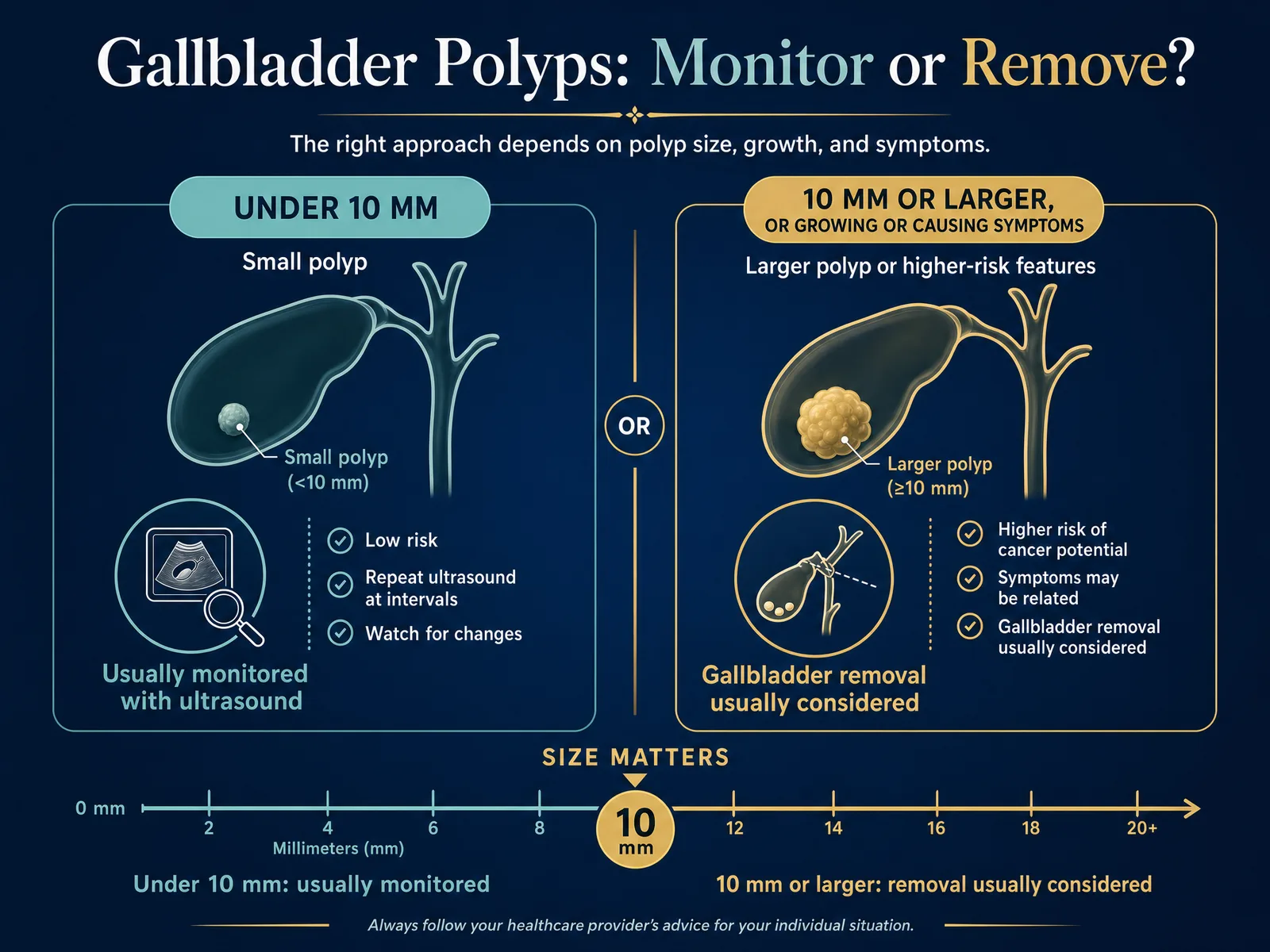
There are really only two paths: watch it, or remove it. Which one applies depends mainly on size, together with the features above. As a general guide that doctors use — not a rule to apply to yourself — the European joint guideline suggests:
- 10 mm (1 cm) or larger: removal of the gallbladder is usually recommended.
- Smaller than 10 mm: usually watched with repeat ultrasound scans, with the plan depending on your particular polyp and risk factors.
- Symptomatic polyps, or polyps 6 mm or larger together with risk factors: surgery may be advised.
- A polyp that grows on follow-up (a surgical review suggests growth of more than about 2 mm): this usually tips the decision toward removal.
It is worth knowing that this guidance is evolving. Newer recommendations are moving toward looking closely at a polyp's shape and doing less monitoring and surgery for small, harmless-looking polyps — which is one reason different sources you read online may give slightly different advice. Your surgeon will apply current practice to your specific scan.
One practical point that often surprises people: when a polyp does need treating, the operation removes the whole gallbladder — usually by keyhole (laparoscopic) surgery — because the polyp cannot be shaved off on its own. You can read what that involves in our guide to gallbladder removal in Abu Dhabi, and what to expect afterwards in gallbladder surgery recovery.
When to seek urgent care
A polyp on its own is not an emergency. But because polyps often sit alongside gallstones, it is worth knowing the warning signs of a gallbladder problem that does need prompt attention.
Seek urgent medical assessment if you develop:
- Severe or persistent pain in the upper-right or upper-middle abdomen
- A high temperature, fever or chills
- Yellowing of the skin or the whites of the eyes (jaundice)
- Dark urine or unusually pale stools
- Repeated vomiting
In an emergency in the UAE, call 998 for an ambulance, or go to your nearest emergency department.
What to do next
If you have been told you have a gallbladder polyp, the sensible next step is a calm, informed conversation rather than either panic or dismissal. Bring your ultrasound report — the size of the polyp is the single most useful number on it — along with a note of any symptoms and your medical history.
Dr Rajarshi Mitra can review your scan and history, explain what your particular polyp means, and help you decide whether watchful monitoring or planned keyhole surgery is the right path for you. If you would like it looked at, you can book a consultation in Abu Dhabi.