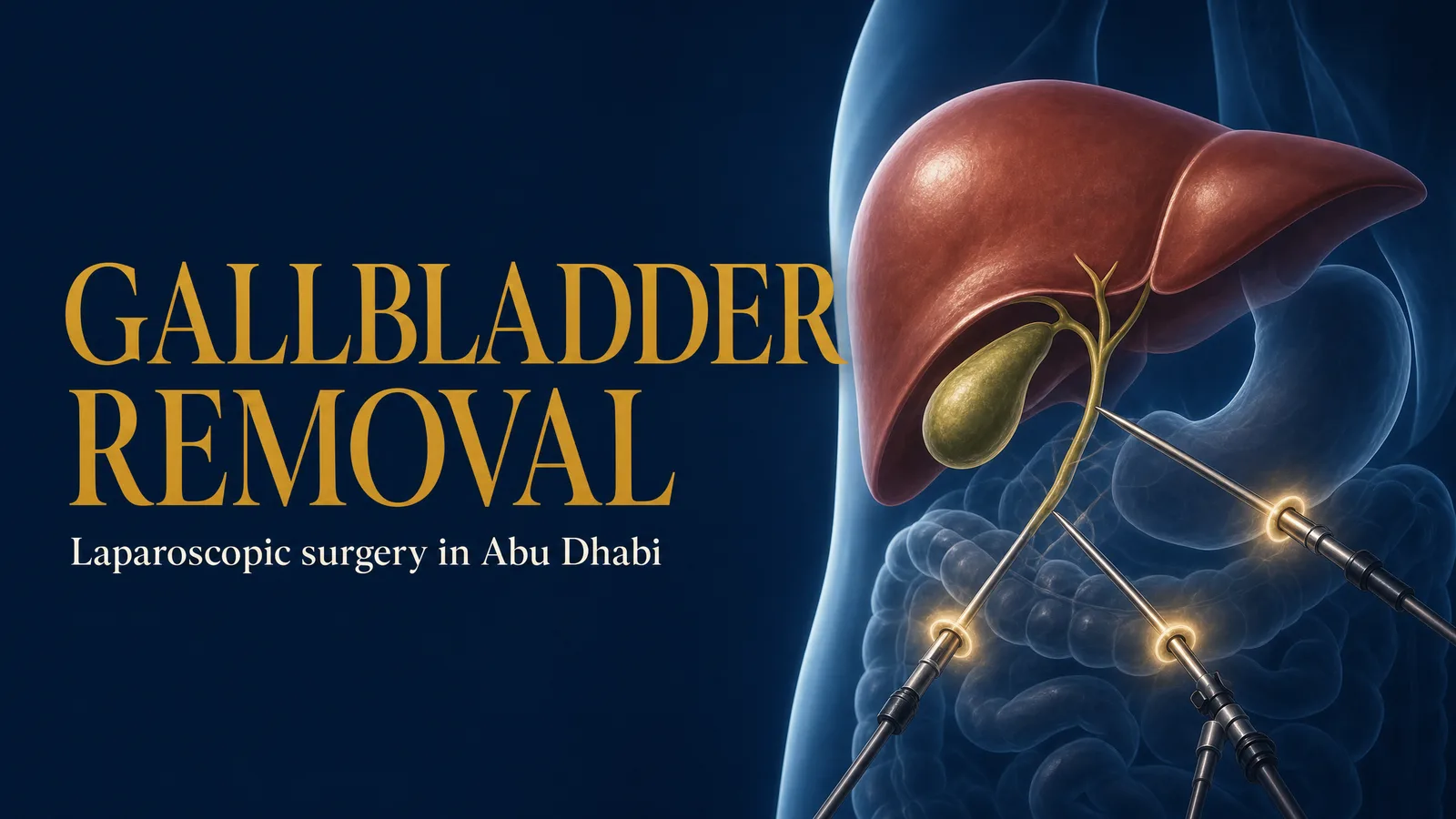
Gallbladder removal — known medically as a cholecystectomy — is an operation to take out the gallbladder, the small pear-shaped organ under the liver that stores bile. It is most often recommended when gallstones cause repeated pain, inflammation or complications. Today the operation is usually done by laparoscopic (keyhole) surgery, through a few small incisions rather than one large one, which typically means less pain and a faster recovery than open surgery. This guide explains when surgery is considered, what happens during and after the operation, the risks involved, and how to arrange an assessment in Abu Dhabi. It is educational information, not a diagnosis — only a consultation can decide whether surgery is right for you.
Gallbladder removal is surgery to remove the gallbladder, usually because gallstones are causing symptoms or complications. In most cases it is performed laparoscopically, using three or four small incisions and a camera, under general anaesthesia. The gallbladder is not essential for digestion, and most people live normally without it because bile flows directly from the liver into the intestine. Surgery is generally advised for symptomatic gallstones, inflammation (cholecystitis) or related problems, while gallstones found by chance without symptoms are often simply monitored. Recovery from keyhole surgery is usually measured in days to a couple of weeks, though this varies from person to person.
- A cholecystectomy removes the gallbladder, most commonly because of symptomatic gallstones or gallbladder inflammation.
- Laparoscopic (keyhole) surgery is the standard approach and is generally safer and quicker to recover from than open surgery.
- You can live well without a gallbladder — bile simply flows straight from the liver to the intestine.
- Not all gallstones require an operation. Stones found by chance with no symptoms are often watched rather than removed.
- Some operations are more difficult than expected and may need to be converted to open surgery for safety — this is a considered decision, not a failure.
- Recovery varies. Many people return to light activity within one to two weeks, but your own timeline depends on your health and the procedure.
- Certain symptoms need urgent care, including severe abdominal pain, high fever, or yellowing of the skin or eyes.
What is the gallbladder, and what does removing it mean?
The gallbladder is a small sac that sits just beneath the liver on the right side of the upper abdomen. Its job is to store and concentrate bile, a fluid the liver makes to help digest fats. When gallstones — hardened deposits of bile — form and block the flow of bile, they can cause pain and inflammation.
A cholecystectomy removes the whole gallbladder, stones and all. Because the liver continues to produce bile after surgery, digestion generally continues normally; the bile simply drains directly into the small intestine instead of being stored first. This is why the gallbladder is considered a non-essential organ, and why removing it — rather than trying to remove stones while leaving the gallbladder in place — is the established treatment for most people with troublesome gallstones.
Why gallbladder removal is recommended
Surgery is usually discussed when gallstones are actually causing problems. Common reasons include:
- Biliary colic — repeated attacks of intense pain in the upper-right abdomen, often after fatty meals.
- Acute cholecystitis — inflammation or infection of the gallbladder, which can cause constant pain, fever and tenderness. International emergency-surgery guidelines support early laparoscopic surgery as the standard treatment for this, including in many higher-risk patients.
- Gallstones that have moved into the bile duct, or that have caused pancreatitis (inflammation of the pancreas).
An important distinction is between gallstones that cause symptoms and gallstones that do not. Stones discovered by chance on a scan, with no pain or complications, often do not require surgery and may simply be monitored. Do all gallstones require treatment? No — the decision depends on your symptoms, your scans and your overall health, which is exactly what an in-person assessment is for.
There is also a small but important reason surgery is sometimes recommended even when symptoms are mild: in rare cases, gallbladder disease can mask an unsuspected cancer, and long-standing inflammation is part of that picture. This is not a reason for alarm — gallbladder cancer is uncommon — but it is one of several factors a surgeon weighs.
Symptoms and how gallbladder problems are diagnosed
Gallbladder symptoms can be surprisingly non-specific. Classic signs include pain in the upper-right or upper-middle abdomen, sometimes spreading to the back or right shoulder, often after eating. But indigestion, bloating and nausea overlap with many other conditions, so symptoms alone cannot confirm that gallstones are the cause.
Diagnosis usually combines your history with tests. An ultrasound scan is the most common first investigation and is good at detecting stones and gallbladder wall thickening. Blood tests can check for signs of inflammation, infection or a blocked bile duct, and in some cases further imaging is used. Because location and symptoms overlap with heart, stomach and liver problems, proper assessment matters before any treatment is planned.
How laparoscopic cholecystectomy is performed
Laparoscopic cholecystectomy is done under general anaesthesia, so you are fully asleep. The surgeon makes a few small incisions in the abdomen — typically three or four — and gently inflates the abdomen with gas to create space to work. A thin camera (laparoscope) provides a magnified view on a screen, and fine instruments are used to separate the gallbladder from the liver and bile duct, seal the small vessels and duct, and remove the gallbladder through one of the incisions.
A central safety principle is careful identification of the anatomy before anything is divided — surgeons call this achieving a clear "critical view" of the structures. When the anatomy is clear, keyhole surgery is efficient and reliable, and the traditional four-port laparoscopic approach remains the standard of care.
Sometimes the operation is more difficult than expected — for example when there is severe inflammation, dense scarring from previous surgery, or unclear anatomy. In those situations the surgeon may switch from keyhole to open surgery (a larger single incision), or use a recognised alternative technique. Converting to open surgery is a deliberate safety decision to protect the bile duct and blood vessels — not a complication or a mistake.
Risks and possible complications
Laparoscopic cholecystectomy is one of the most commonly performed abdominal operations and is generally safe, but no surgery is without risk. Honest risk education matters more than reassurance. Possible complications include:
- Bleeding or infection at the incision sites or internally.
- Bile leak or, uncommonly, injury to the bile duct — a serious but infrequent complication that surgeons take specific steps to avoid.
- Retained stones in the bile duct, which may need a further procedure.
- Risks related to anaesthesia, as with any operation.
Certain factors make an operation more challenging and can raise the risk of complications — including obesity, previous abdominal surgery, and severe or long-standing inflammation. Your surgeon will discuss your individual risk with you before you decide.
Recovery after gallbladder removal
Recovery depends on whether the operation was keyhole or open, and on your general health. After laparoscopic surgery, many people go home within 24 hours when medically appropriate, though this is decided case by case and never promised in advance.
What to expect in the early weeks:
| Stage | What is common |
|---|---|
| First 24–48 hours | Some abdominal and shoulder-tip discomfort from the gas; managed with pain relief. |
| First 1–2 weeks | Gradual return to light activity and desk-based work for many people; tiredness is normal. |
| Heavier activity | Lifting and strenuous exercise are usually reintroduced later, on your surgeon's advice. |
| Diet | Most people return to a normal diet; some find fatty meals are better reintroduced gradually. |
Most people digest food normally after surgery. A minority experience looser or more frequent stools, which is linked to changes in how bile reaches the intestine and often settles with time or simple measures. A smaller group have ongoing symptoms after surgery — sometimes called post-cholecystectomy syndrome — which is one reason careful assessment before surgery is so important, to confirm the gallbladder is truly the source of the problem.
For a broader view of what to expect around the operation, our surgery journey overview walks through the steps from consultation to recovery.
Seek urgent medical care if you develop severe or persistent abdominal pain, a high fever or chills, yellowing of the skin or eyes (jaundice), repeated vomiting, or dark urine with pale stools — whether before surgery or during recovery. These can indicate a blocked bile duct, infection or another complication that needs prompt assessment. In an emergency in the UAE, call 998 for an ambulance.
Gallbladder removal in Abu Dhabi
If you have been told you may need your gallbladder removed, an in-person assessment is the right next step. Dr Rajarshi Mitra is a DOH Licensed Surgeon (Department of Health — Abu Dhabi, Licence No. GD22446) — MBBS, MS (General Surgery), FIAGES, FICS (USA), FACS, Dip.Lap (IRCAD, Strasbourg), Dip. Hernia (APHS) — with consultations by appointment at NMC Specialty Hospital, Abu Dhabi.
A consultation is a chance to review your symptoms and scans, discuss whether surgery or continued monitoring makes more sense for you, and understand the procedure, recovery and risks in the context of your own health. To learn more about related gallbladder conditions, see our conditions overview.
Preparing for your consultation
You can make your appointment more useful by bringing:
- any ultrasound or scan reports and blood test results you already have;
- a list of your symptoms, when they happen, and how they relate to meals;
- your current medications and any relevant medical history;
- your insurance details if you plan to use coverage.
Coverage and pre-authorisation depend on your specific policy and the insurer's decision, so this website cannot promise approval — that decision always rests with the insurer. The team can help you understand the process. For current appointment availability, please contact the team.