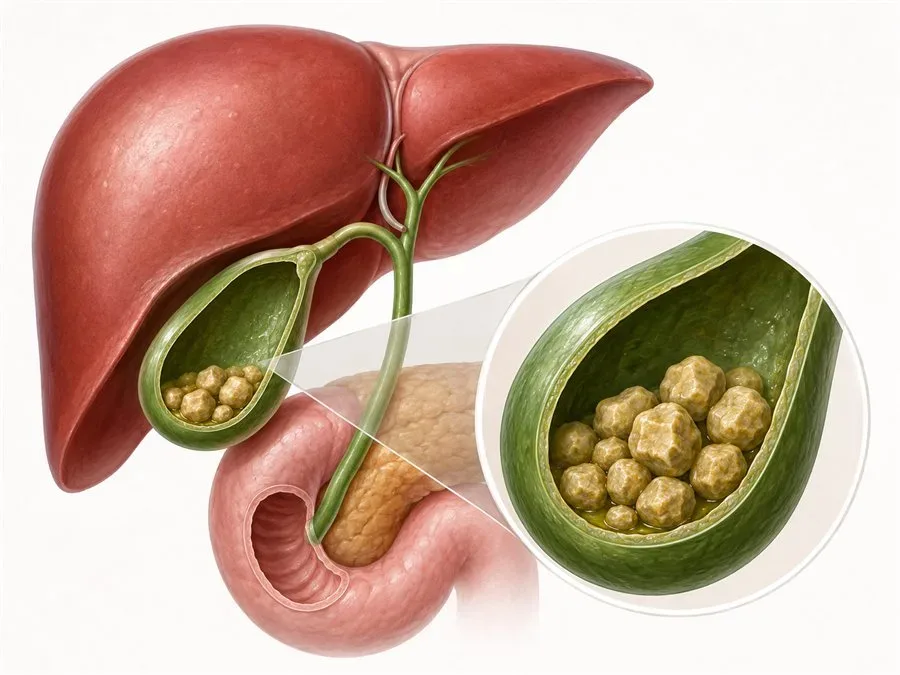
Most gallstones never cause a single symptom. They sit quietly in the gallbladder, cause no pain, and are often discovered by chance during a scan done for another reason. When gallstones do cause trouble, the usual sign is a "gallbladder attack" — a bout of pain in the upper-right or central part of the tummy, often after a fatty meal. This guide explains what those symptoms feel like, which signs are genuinely urgent, and when it is worth being assessed by a doctor here in Abu Dhabi.
Do gallstones always cause symptoms?
No. Most people who have gallstones do not have any symptoms at all. These are often called "silent" stones, and they are frequently found unexpectedly on an ultrasound scan carried out for something else. Silent gallstones usually do not need treatment on their own.
That said, "silent" does not mean "never." Over time, a minority of people with quiet gallstones go on to develop symptoms, and once symptoms begin they tend to come back. This is why gallstones that are causing pain are taken more seriously than stones that have never caused any trouble.
If gallstones have turned up on a scan you had for another reason and you have no symptoms, there is usually no need to panic. Silent stones are common and often stay quiet for years. What matters is knowing the symptoms to watch for — the ones described below — so that if anything changes you can act on it. If you are unsure what a scan finding means for you, the gallbladder conditions we assess page gives an overview, and a consultation can put the result in the context of your own health.
What a gallbladder attack feels like
The classic symptom of gallstones is a "gallbladder attack," known medically as biliary colic. The pain is usually felt in the upper-right part of the abdomen, just under the ribs, or in the centre of the upper tummy below the breastbone.
An attack often has a recognisable pattern:
- The pain can be severe and steady, rather than a mild ache that quickly passes.
- It typically lasts from about 30 minutes up to a few hours before easing.
- It may spread to the back, often between the shoulder blades, or to the right shoulder.
Pain that is very severe, or that lasts longer than a few hours, is not the usual pattern and should prompt medical assessment — see the urgent warning signs below.
When symptoms tend to appear
Gallbladder attacks often come on after a heavy or fatty meal, and they can happen in the evening or during the night. There is a simple reason for the link with food: after a fatty meal the gallbladder squeezes to push bile into the intestine to help digestion. If a stone briefly blocks the gallbladder's outlet as it does this, the result is the colicky pain of an attack. Some people notice that particular meals seem to set off an episode, although not everyone can tie their attacks to food.
Attacks also tend to recur. Someone who has had one gallbladder attack will often have more, sometimes days, weeks or months apart. A pattern of repeated upper-abdominal pain — especially after meals or at night — is one of the more telling signs that gallstones may be involved, and it is worth mentioning to a doctor even if each episode settles on its own.
Other symptoms that can come with an attack
Alongside the pain, a gallbladder attack is often accompanied by nausea or vomiting. Some people also notice indigestion, bloating or belching. It is worth being cautious with these last symptoms: indigestion and bloating are very common and can be caused by many everyday conditions, so on their own they do not mean you have gallstones. They are most meaningful when they occur together with the typical pattern of pain described above.
The table below summarises the difference between the usual symptoms of a gallbladder attack and the warning signs that need urgent attention.
| Typical gallbladder-attack symptoms | Warning signs — seek urgent care |
|---|---|
| Pain in the upper-right or central upper tummy | Yellowing of the skin or the whites of the eyes (jaundice) |
| Pain that eases within a few hours | Fever, chills or feeling shivery |
| Pain after a fatty meal, sometimes at night | Dark (tea-coloured) urine or pale, light-coloured stools |
| Nausea, vomiting or bloating with the pain | Pain that is very severe or lasts more than a few hours |
When to see a doctor about gallbladder symptoms
Not every twinge needs an emergency visit, but recurring gallbladder pain is worth having assessed. Repeated attacks of upper-abdominal pain, especially after meals, are a reason to see a doctor even when each episode settles on its own — because symptomatic gallstones tend to keep causing trouble, and a smaller number of people go on to develop complications.
When gallstones are causing repeated symptoms, the treatment usually discussed is keyhole (laparoscopic) gallbladder surgery. Whether and when to operate is an individual decision, made with you after your symptoms, scan findings and general health have been reviewed — it is never automatic, and silent stones often need no surgery at all. If surgery does become relevant, your gallbladder surgery journey explains what the process involves.
An assessment usually starts with a conversation about your symptoms and an ultrasound scan. Bringing any previous scan reports and a list of your symptoms to the consultation helps the picture come together quickly.