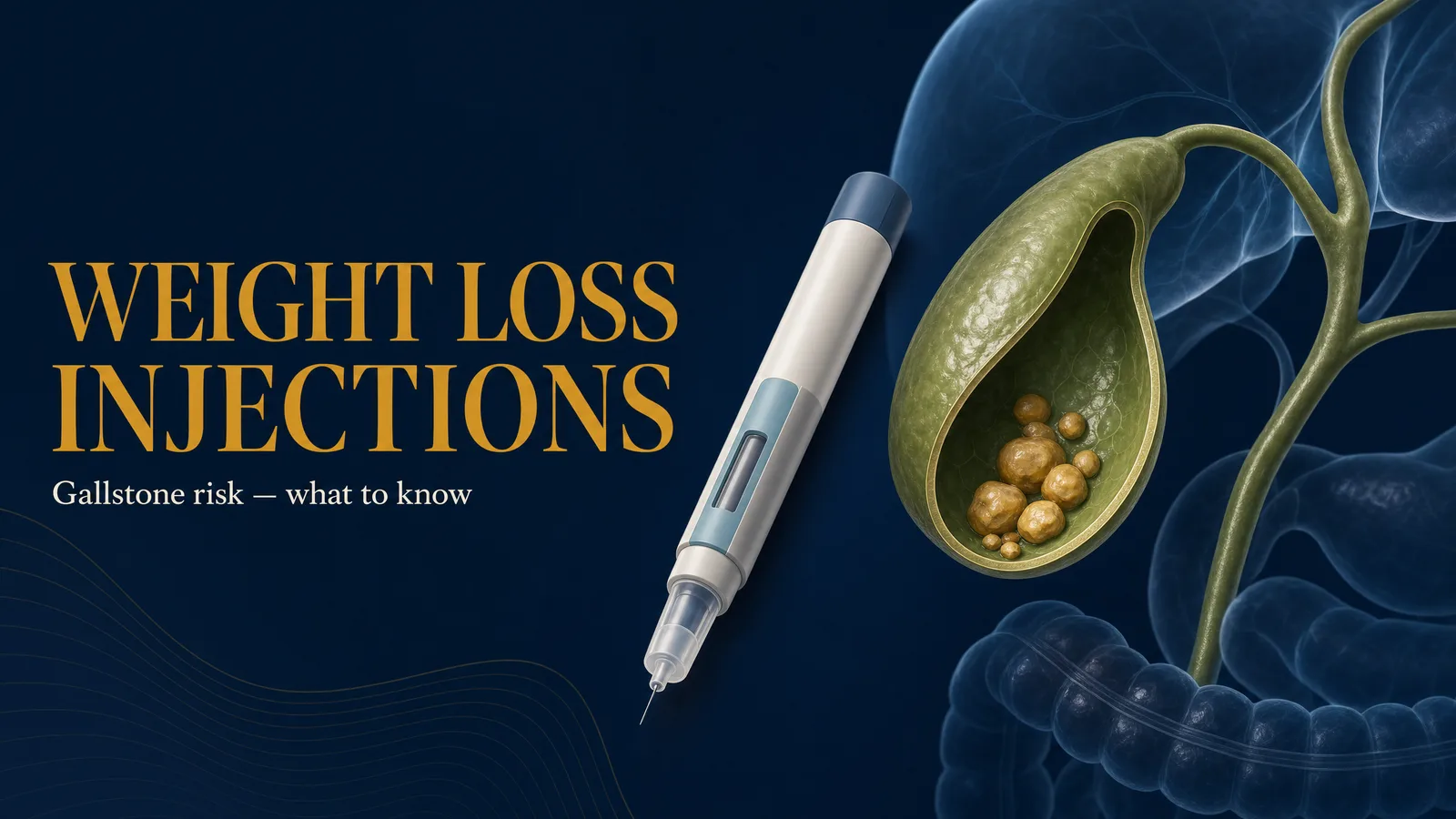
If you're using — or considering — a weight-loss injection such as Ozempic, Wegovy, Mounjaro or Saxenda, you may have heard that these medications can raise the risk of gallstones. The short answer: rapid or substantial weight loss, however it happens, is already a recognised gallstone risk factor, and because these injections often produce fast, significant weight loss, people using them can be exposed to that same general risk. A large review of clinical trial evidence has also found a link between this class of medication and gallbladder or bile-duct problems specifically. This guide explains the mechanism, what the evidence does and doesn't show, and the warning signs that mean it's time to get checked.
Why rapid weight loss affects the gallbladder
Gallstones typically form from an imbalance in bile — for example, too much cholesterol for the amount of bile salts available to keep it dissolved — or when the gallbladder isn't emptying efficiently. Losing weight quickly can make both of these more likely.
This isn't specific to any one method of losing weight. Rapid or substantial weight loss — whether through diet, a structured lifestyle change, bariatric surgery or a weight-loss injection — is a recognised risk factor for developing gallstones. The mechanism is the same regardless of what's driving the weight loss; what matters is the speed and scale of the change, not the method itself.
Do weight-loss injections raise gallstone risk specifically?
Weight-loss injections such as semaglutide, tirzepatide and liraglutide — sold under brand names including Ozempic, Wegovy, Mounjaro and Saxenda — belong to a class of medication called GLP-1 receptor agonists. They often produce significant, sometimes rapid, weight loss. Because rapid weight loss is a recognised gallstone risk factor in general, people using these medications can be exposed to that same underlying risk.
What the evidence shows
Beyond that general weight-loss mechanism, there is also drug-specific evidence. A systematic review and meta-analysis of randomized controlled trials, published in JAMA Internal Medicine, found that GLP-1 receptor agonist use is associated with an increased risk of gallbladder and biliary disease — including gallstones — compared with people not using these medications. This is a direction of association rather than a personal risk score: the review doesn't tell any individual reader how likely they, specifically, are to develop gallstones, and it isn't a reason to expect a particular outcome from your own treatment.
What this finding does not mean
This finding is not a personalised risk estimate, and it is not a reason to start, stop or change a prescribed weight-loss medication on your own. Whether a weight-loss injection is right for you — and how any gallbladder risk factors into that — is a decision for you and your prescribing doctor, made with your full medical history in view. This page is educational: it explains a general association seen in the evidence, not a diagnosis or a treatment instruction.
What to do if you're using, or considering, a weight-loss injection
If you're already using a weight-loss injection, there's usually no need to be alarmed — most people using these medications never develop gallstone problems. It's worth mentioning any personal or family history of gallstones to your prescribing doctor, and being aware of the warning signs above so you know when to seek assessment rather than wait.
If you're considering starting one of these medications and you already know you have gallstones, silent or symptomatic, that's worth raising with your prescribing doctor before you begin, so it can be weighed into your overall treatment plan. Either way, this page can't make an individual treatment decision for you — that's what a consultation is for, whether with your prescribing doctor or, where gallbladder symptoms are involved, a gallbladder specialist.
Related reading
For the full range of gallbladder-attack symptoms and when they need urgent attention, see gallbladder stone symptoms. If gallstones do progress to needing treatment, the gallbladder surgery journey explains what to expect. A dedicated guide to the full range of gallstone causes is in preparation.