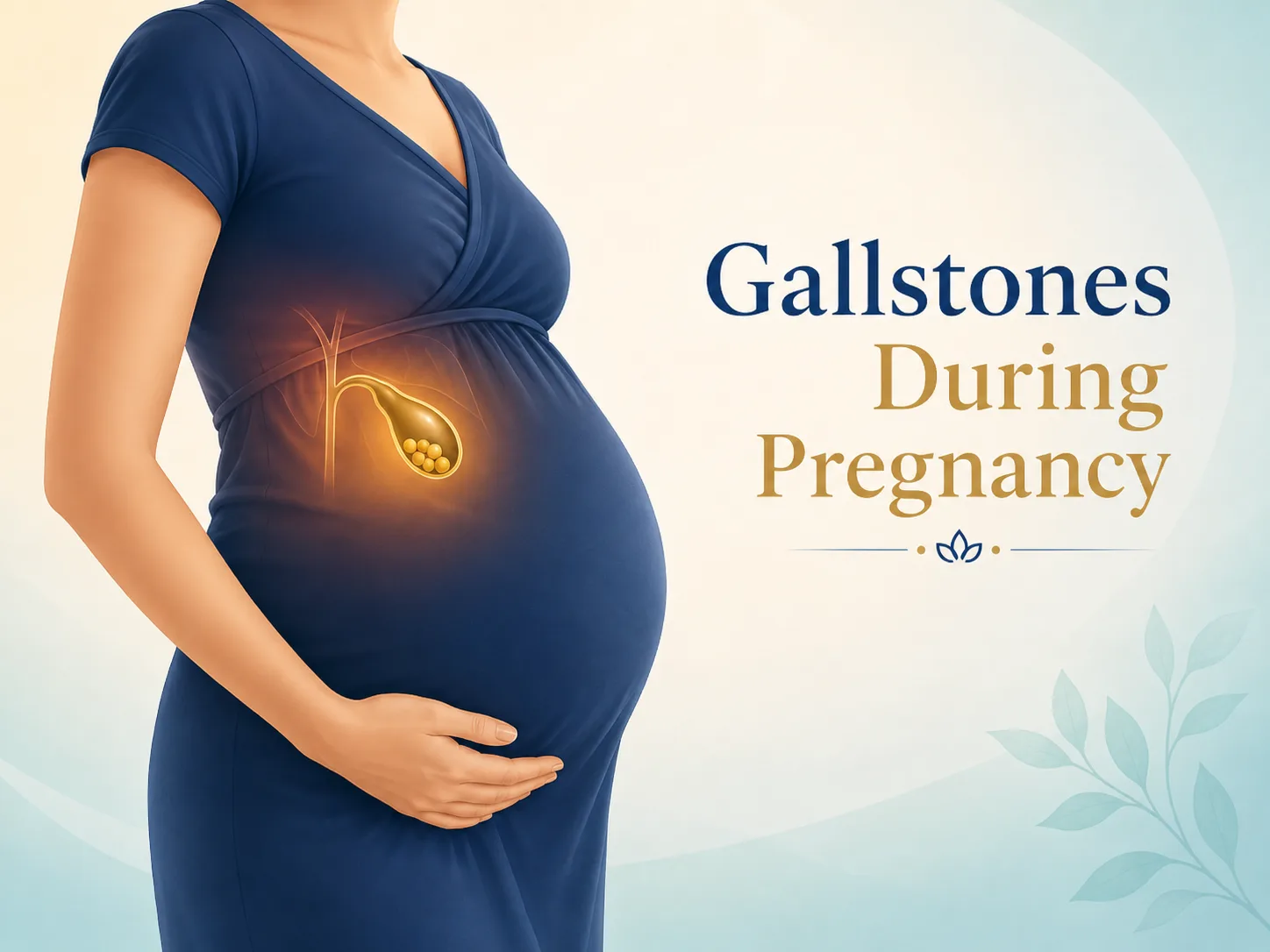
Gallstones during pregnancy are common, and in most cases they are managed without an operation. When they do cause trouble, the usual problem is episodic upper-abdominal pain rather than an emergency. The important decision is not whether you have stones but how they are behaving: mild, occasional pain is often watched and managed conservatively, while recurrent attacks or signs of a blocked or inflamed gallbladder may make surgery the safer choice — even during pregnancy. This article explains why gallstones happen more often in pregnancy, how doctors tell a simple gallbladder attack apart from a complication, which tests are safe for you and your baby, and what pregnant patients in Abu Dhabi and the wider UAE can do next.
Gallstones in pregnancy are hardened deposits in the gallbladder that become more likely because pregnancy hormones slow the gallbladder and change bile. Many pregnant patients have no symptoms or only occasional pain after meals, and are managed with diet, fluids, and close follow-up. Surgery is not automatic. When attacks keep returning, or when there is fever, jaundice (yellowing of the skin or eyes), persistent vomiting, or severe ongoing pain, a blocked or inflamed gallbladder may be present — and laparoscopic (keyhole) gallbladder removal can be performed during pregnancy when it is genuinely required. Diagnosis usually combines your symptoms with an ultrasound scan, which is safe because it uses no radiation. Any red-flag symptom in pregnancy should be assessed promptly rather than waited out at home.
- Pregnancy raises the risk of gallstones because hormones slow gallbladder emptying and make bile more likely to form stones.
- Most gallstones in pregnancy are managed without surgery, especially when pain is mild, occasional, and settles fully.
- Ultrasound is the first-line test in pregnancy because it uses no ionising radiation; blood tests help show whether the gallbladder is blocked or inflamed.
- Not all gallstones require an operation — but recurrent attacks or complications can make surgery the safer path.
- When surgery is genuinely required, laparoscopic (keyhole) gallbladder removal can be done during pregnancy; the second trimester is often considered a favourable window when timing is possible.
- Fever, jaundice, persistent vomiting, dark urine, pale stools, or severe unrelenting pain need prompt medical assessment, not watchful waiting.
What are gallstones, and why are they more common in pregnancy?
Gallstones are small, hardened deposits that form inside the gallbladder — a pear-shaped pouch under the liver that stores bile, the fluid that helps digest fat. Most gallstones are made largely of cholesterol.
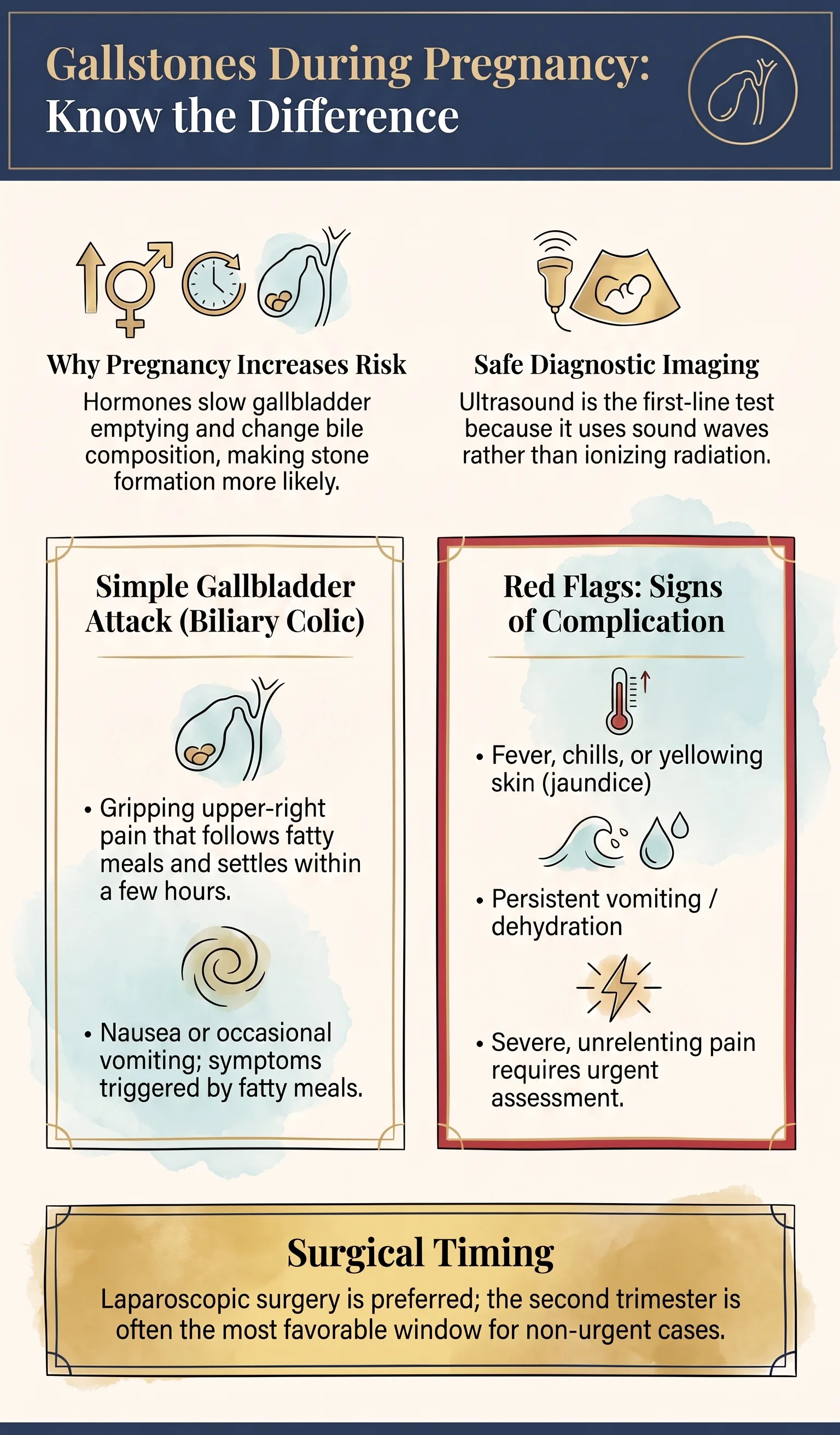
Pregnancy makes gallstones more likely for two main reasons. First, higher levels of the hormones oestrogen and progesterone change the make-up of bile so that it holds more cholesterol, which is more likely to crystallise into stones. Second, the gallbladder empties more slowly in pregnancy, so bile sits and stagnates — a state doctors call bile stasis. Together these changes mean stones can form for the first time during pregnancy, or existing stones can start to cause symptoms.
Having gallstones is not the same as having a problem. Many people carry stones for years without knowing. Only stones that cause symptoms or complications are treated as gallstone disease — and even then, treatment depends on how the stones behave, not simply on their presence.
Symptoms that suggest gallstones — and those that suggest a complication
The classic gallbladder symptom is biliary colic: a gripping pain in the upper-right or upper-middle abdomen, often starting after a fatty meal. The pain can spread to the back or the right shoulder blade, may come with nausea or vomiting, and usually lasts from a few minutes to a few hours before easing.
In pregnancy this can be genuinely hard to tell apart from reflux, heartburn, or the stretching discomfort of a growing uterus. That overlap is exactly why abdominal pain in pregnancy should be assessed rather than assumed — many conditions can feel similar, and gallstones should not be taken for granted as the cause.
A simple gallbladder attack settles. What should worry you more is pain that does not settle, or comes with other warning signs. The following features point away from simple colic and toward a complication such as an inflamed gallbladder (cholecystitis), a blocked bile duct, or inflammation of the pancreas (pancreatitis):
- fever or chills;
- yellowing of the skin or the whites of the eyes (jaundice);
- pain that is severe and does not ease after a few hours;
- repeated vomiting, or being unable to keep fluids down;
- dark urine or unusually pale stools.
These are the symptoms that change the plan, because in pregnancy a systemic illness can affect both mother and baby.
How doctors diagnose gallstones safely in pregnancy
Diagnosis usually rests on two things together: your pattern of symptoms and an imaging test.
Ultrasound is the first-line scan. It is the preferred test in pregnancy because it uses sound waves rather than ionising radiation, so it is considered safe for the baby, and it is very good at showing stones in the gallbladder. A normal scan does not rule out every cause of abdominal pain, so your doctor interprets it alongside your symptoms.
Blood tests support the picture. Liver enzymes and bilirubin can suggest whether a bile duct is blocked; a white-blood-cell count can point to infection or inflammation; and pancreatic enzymes (amylase and lipase) are checked when pancreatitis is a concern.
Other imaging is used selectively. MRI without contrast may be considered when a bile-duct problem is suspected and ultrasound has not answered the question. CT scans, which use radiation, are generally avoided in pregnancy unless there is a strong specific reason. The choice of test is individualised, balancing the information needed against caution in pregnancy.
Treatment options: observation, supportive care, and surgery
There is no single answer that fits every pregnant patient. Management is chosen from a range, based on how often symptoms occur, how severe they are, the stage of pregnancy, and whether there is any complication.
Conservative (non-surgical) management is common and often appropriate when attacks are mild, infrequent, and settle completely with no sign of infection, blockage, or pancreatitis. It typically means eating a lower-fat diet, staying well hydrated, controlling pain with medicines considered appropriate in pregnancy, and keeping close follow-up. Importantly, conservative care controls symptoms — it does not remove the stones, so attacks can return.
Surgery enters the conversation when the gallbladder keeps causing trouble or a complication develops. It is more strongly considered for recurrent biliary colic, acute cholecystitis, gallstone pancreatitis, or a blocked common bile duct. Do all gallstones require treatment? No — but a gallbladder that repeatedly triggers attacks or complications is a different situation from quiet, occasional pain, and delaying necessary surgery has its own risks.
Diet and lifestyle measures can reduce how often symptoms flare, but they do not remove stones that have already formed. Be cautious of remedies that claim otherwise.
Is laparoscopic gallbladder surgery safe during pregnancy?
This is the question most pregnant patients want answered directly, so here it is: when surgery is genuinely required, laparoscopic (keyhole) removal of the gallbladder is the preferred operation, and it can be carried out during pregnancy. Modern guidance supports not postponing medically necessary surgery simply because a patient is pregnant, and keyhole surgery is commonly feasible with input from an obstetrician and an anaesthetist.
Timing matters. The second trimester is often described as a favourable window for non-urgent surgery, because the early risks of pregnancy have passed and the uterus is not yet large enough to crowd the operating space. But "favourable window" is not a rule — if the gallbladder is acutely inflamed or a complication is worsening, urgent surgery may be needed in any trimester, because leaving a serious biliary problem untreated can be more dangerous than the operation.
It is equally important not to overstate things in the other direction. Surgery is not routine for every pregnant patient with stones, and it is not automatically unsafe for the baby. The realistic goal is to reduce risk through the right timing, the right technique, and a team that plans anaesthesia and, where appropriate, fetal monitoring — not to promise zero risk, which no honest surgeon can do. The safest choice depends on your specific situation and is made with your obstetric team.
Recovery and follow-up
Recovery after laparoscopic gallbladder removal is generally quicker than after open surgery, with smaller incisions and less discomfort, though the exact course varies from person to person and is influenced by pregnancy. Your team will guide pain relief using medicines considered appropriate for your stage of pregnancy.
If your symptoms are being managed conservatively during pregnancy, follow-up often continues after delivery. Because attacks can recur, gallbladder removal is frequently recommended in the period after birth to prevent further episodes and complications. Most people digest normally without a gallbladder, though some find that easing back gradually onto fatty foods is more comfortable at first.
What pregnant patients in Abu Dhabi should do next
If you are pregnant and have upper-abdominal pain, the practical first step is assessment — not self-diagnosis. Your obstetrician and a surgeon usually work together: the obstetric team keeps your pregnancy safe, and the surgical team advises on the gallbladder. Which you see first often depends on how you present; an acute, severe attack may take you to hospital directly, while a milder recurring pattern may start with your regular pregnancy care.
Care for gallstones in pregnancy is best delivered where obstetric and surgical support are available together, so mother and baby can both be looked after. Local referral routes, insurance pre-authorisation, and facility arrangements vary, so confirm these with the clinic or hospital rather than assuming — this website cannot promise how an insurer will decide.
If you would like to discuss your situation, you can book a consultation with Dr Rajarshi Mitra's team in Abu Dhabi. Bring your ultrasound report and, if you have them, your insurance details. You may also find it useful to read about the wider range of gallbladder conditions and what a gallbladder surgery journey typically involves.