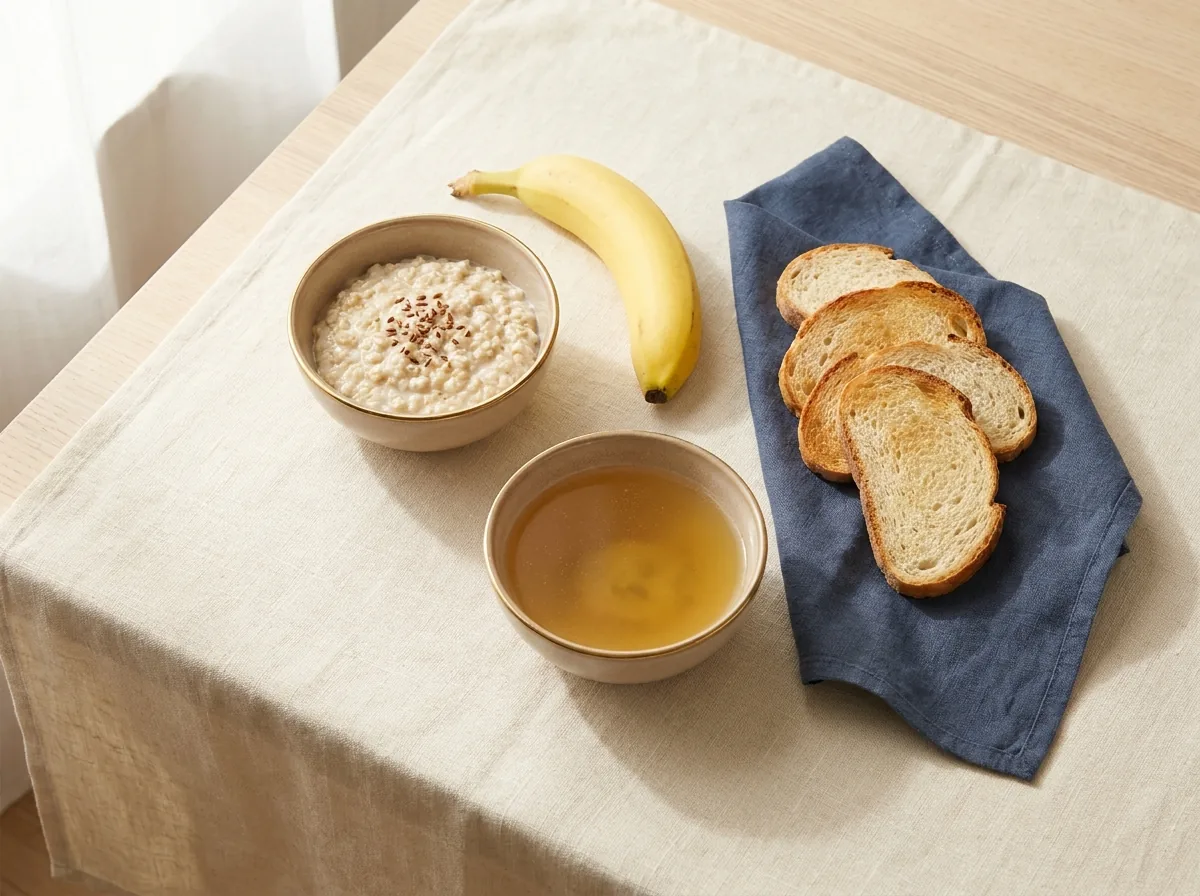
After gallbladder removal (cholecystectomy), most people can eat normally again fairly quickly, but the first week is more comfortable on a gentle, low-fat, small-meal plan while the digestive system adjusts. The menu below is a practical 7-day starting template built around foods that are easy to find and prepare in Abu Dhabi. It is an example of a gentle recovery pattern — not a fixed rule for everyone — and your surgeon's discharge instructions always come first.
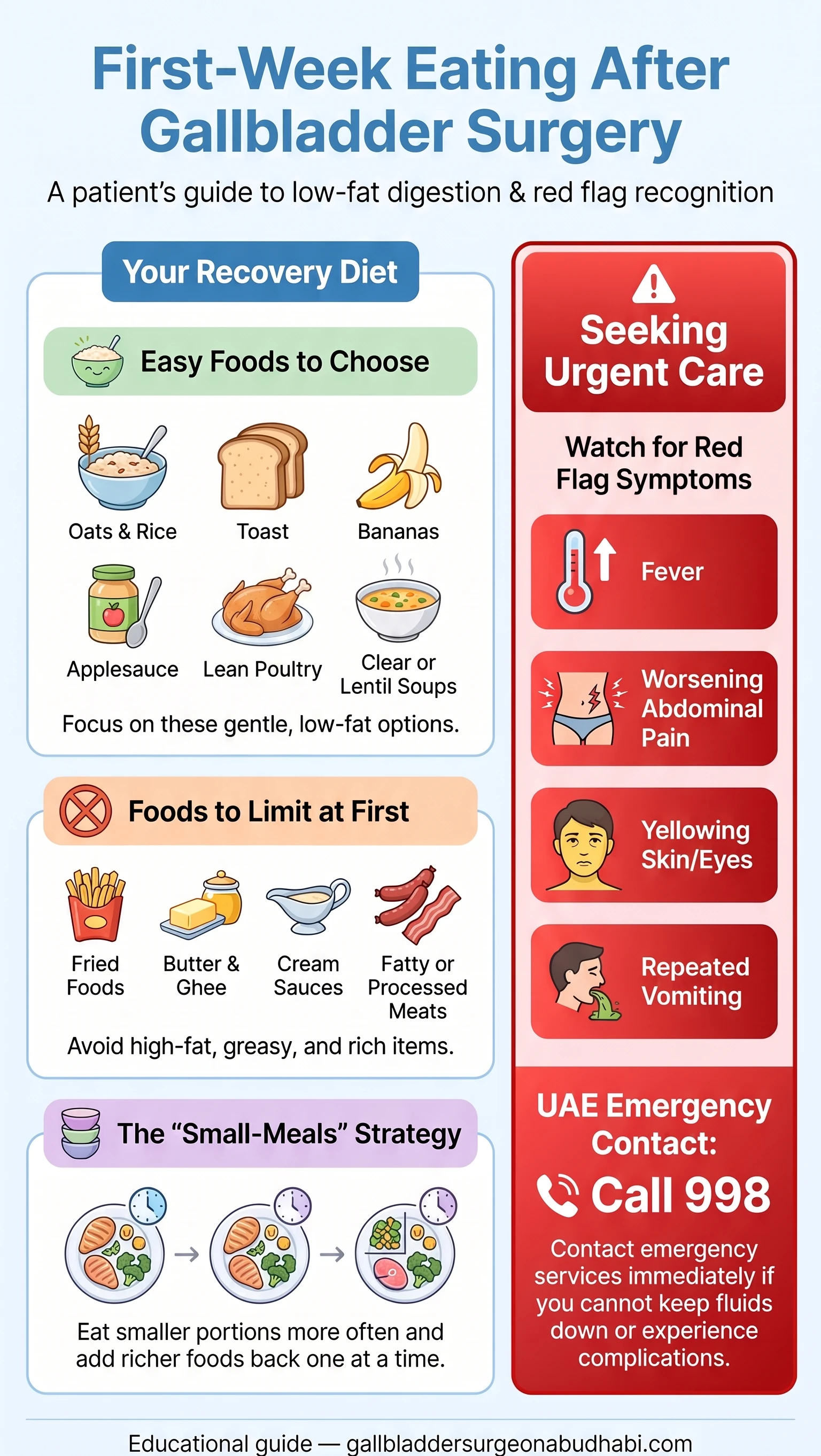
For roughly the first week after gallbladder surgery, eat smaller portions more often, keep fat low, and choose easy-to-digest foods such as oats, rice, toast, bananas, applesauce, lean chicken, white fish, and clear or lentil soups. Sip fluids steadily, especially if you have loose stools. Add fried, creamy, and very fatty foods back slowly and one at a time, watching how you feel. Most people do not need a permanent special diet — this is a short adjustment period. Because tolerance varies from person to person, treat any 7-day menu as a guide and follow your surgeon's specific advice.
- Most people do not need a lifelong special diet after gallbladder removal; a low-fat, small-meal approach is usually a temporary comfort measure for the first week or two.
- Easy first-week foods include oats, rice, toast, bananas, applesauce, lean poultry, white fish, yogurt if tolerated, and clear or lentil soups.
- Fried foods, heavy cream, rich sauces, and large fatty meals are the most common early triggers for bloating, cramping, and diarrhoea.
- Mild, short-lived loose stools or gas can be normal early on, but persistent or severe diarrhoea should be reviewed by your doctor.
- Fever, worsening abdominal pain, yellowing of the skin or eyes, repeated vomiting, or being unable to keep fluids down are reasons to seek urgent care — not diet changes.
Why diet changes after gallbladder surgery
The gallbladder stores and concentrates bile, the fluid your liver makes to help digest fat. When the gallbladder is removed, the liver still produces bile — it simply drips into the intestine more continuously instead of being released in a concentrated burst after a fatty meal. For most people this change is barely noticeable after a short adjustment. For others, large or very fatty meals in the first days can cause bloating, cramping, or loose stools until the digestive system settles.
That is the whole reason a temporary diet helps: it reduces the amount of fat arriving at once, keeps meals small, and gives your body an easy few days. The goal is comfort and tolerance, not strict avoidance of all fat. Most people gradually return to a broad, normal diet, and there is no evidence that avoiding fat forever is necessary or helpful once recovery is complete.
The 7-day recovery menu
Think of this week in gentle phases: the first two days are the lightest, days 3–4 add a little more substance, and by days 5–7 you are moving back toward normal meals in small portions. Cook by boiling, steaming, grilling, or baking rather than frying. Portions should be small — it is better to eat five or six little meals than three large ones.
| Day | Breakfast | Lunch | Dinner | Snacks |
|---|---|---|---|---|
| 1 | Plain oats made with water or low-fat laban; banana | Clear vegetable or chicken shorba (soup); plain rice | Mashed potato; steamed carrots | Applesauce; water, weak tea |
| 2 | Toast (no butter); stewed apple | Lentil soup (light on oil); plain rice | Baked white fish (small piece); boiled vegetables | Low-fat yogurt; banana |
| 3 | Oats with a little honey; sliced banana | Grilled skinless chicken (small); rice; cucumber | Vegetable soup; plain khubz (whole-wheat) | Stewed pear; laban |
| 4 | Boiled egg; toast | Steamed fish; rice; boiled courgette | Chicken and vegetable soup; small potato | Melon; low-fat yogurt |
| 5 | Oats; a few dates | Grilled chicken; rice; salad (light dressing) | Baked fish; mashed potato; peas | Banana; handful of plain crackers |
| 6 | Scrambled egg (little/no oil); toast | Lentils and rice (dal-style, light oil) | Grilled chicken; steamed vegetables; khubz | Apple; yogurt |
| 7 | Oats or wholegrain cereal with low-fat milk | Small mixed plate: chicken or fish, rice, vegetables | Vegetable soup; grilled protein; potato | Fruit; laban |
This menu is halal-friendly and built from everyday items available in Abu Dhabi supermarkets. Swap like for like if something does not suit you — white fish for chicken, laban for yogurt, rice for potato. If a particular food causes discomfort, leave it out for a few days and try again later.
Foods to limit or go easy on at first
You do not need to fear food, but a few things commonly cause early symptoms and are worth reintroducing slowly:
- Fried and deep-fried foods (fries, fried chicken, samosas, pakora).
- Heavy cream, butter, ghee, rich curries, and creamy sauces.
- Fatty cuts of meat, processed meats, and full-fat cheese in large amounts.
- Very large meals of any kind — portion size matters as much as fat content.
- Strong coffee, fizzy drinks, and very spicy food if they upset you early on; many people tolerate these again within a couple of weeks.
The point is not permanent restriction. It is to avoid overwhelming your digestion in the first days and to notice your personal triggers.
How to reintroduce normal foods
From around the end of the first week, most people can start widening their diet. Add one richer or higher-fat food at a time, in a small amount, and see how you feel over the next day before adding another. If a food causes cramping or loose stools, step back and try a smaller portion again in a few days. This symptom-guided approach is more reliable than any fixed calendar, because people recover at different rates. If your surgeon has not placed specific restrictions, there is usually no medical reason to avoid whole food groups long term.
Keep drinking enough fluids throughout — water, weak tea, and laban are good choices — particularly if you have had loose stools, which can be dehydrating.
What symptoms are normal, and what is not
Some digestive change is common in the early weeks. Mild bloating, gas, and short-lived loose stools after fattier meals can happen while your body adapts, and they usually improve with time and smaller, lower-fat meals. A minority of people have looser stools that persist longer; this is worth mentioning to your doctor rather than simply enduring, because it can sometimes be treated. Ongoing abdominal pain after gallbladder surgery is not something to dismiss either — studies of gallstone surgery note that a proportion of patients continue to have abdominal pain afterwards, which deserves proper assessment rather than being assumed to be "just diet."
The key distinction is between routine adjustment and warning signs. Diet changes manage the first. The second needs medical attention.
Seek urgent medical care if you have
- Fever or chills after surgery.
- Worsening or severe abdominal pain, rather than the mild, improving soreness of recovery.
- Yellowing of the skin or eyes (jaundice), dark urine, or pale stools.
- Repeated vomiting or being unable to keep any fluids down.
- Redness, swelling, or discharge from a wound, or heavy diarrhoea causing dehydration.
These features can point to a complication and should not be treated with diet changes or delayed. In an emergency in the UAE, call 998 for an ambulance. Otherwise, contact your surgical team promptly for advice.
Making the menu work for you
A few practical habits make the week easier: shop once for simple staples (oats, rice, potatoes, bananas, apples, lentils, chicken, white fish, laban, whole-wheat khubz), cook in small batches, and keep easy snacks ready so you are not tempted by a large or fatty meal when hungry. You can print or save this menu and shopping list and tick foods off as you go. If your surgeon's discharge sheet differs from this general guide, follow the discharge sheet — it is tailored to your operation.
If you are unsure how your recovery is progressing, or symptoms are not settling, it is reasonable to get reviewed rather than guess. You can read more about what to expect on the surgery journey page, or contact the team for guidance in Abu Dhabi.